The 1991 Fellowship
Meet the fellows working on India's next wave of state-level reform
Following in the spirit of Emergent Ventures, the 1991 Fellowship identifies and supports exceptional early-career professionals advancing classical liberal economic reform across India's states.
The inaugural cohort of the 1991 Fellowship spans 10 states across India that are home to more than 700 million people. Their projects range from electricity market reform in Odisha to municipal finance in Tamil Nadu and access to justice in Maharashtra. While the fellows work in diverse states and policy areas, they share a tenacious commitment to practical, liberal reform.
The response to our call for applications validated what we suspected: Demand for this kind of support far exceeds what currently exists. Hundreds applied, and we received serious inquiries from civil servants, professors, and established policy professionals who were too senior for the fellowship itself. Consequently we expanded the inaugural cohort from 10 to 12 fellows, and four senior candidates will advise as mentors.
Over the next three years, the fellows will receive funding, structured mentorship, and facilitated introductions to the bureaucrats, journalists, and think tanks that can amplify their work.
The liberalizers of 1991 showed what was possible. This fellowship empowers those who will carry that legacy forward, especially at the state level.
Meet the Inaugural Cohort
Armaan Jena
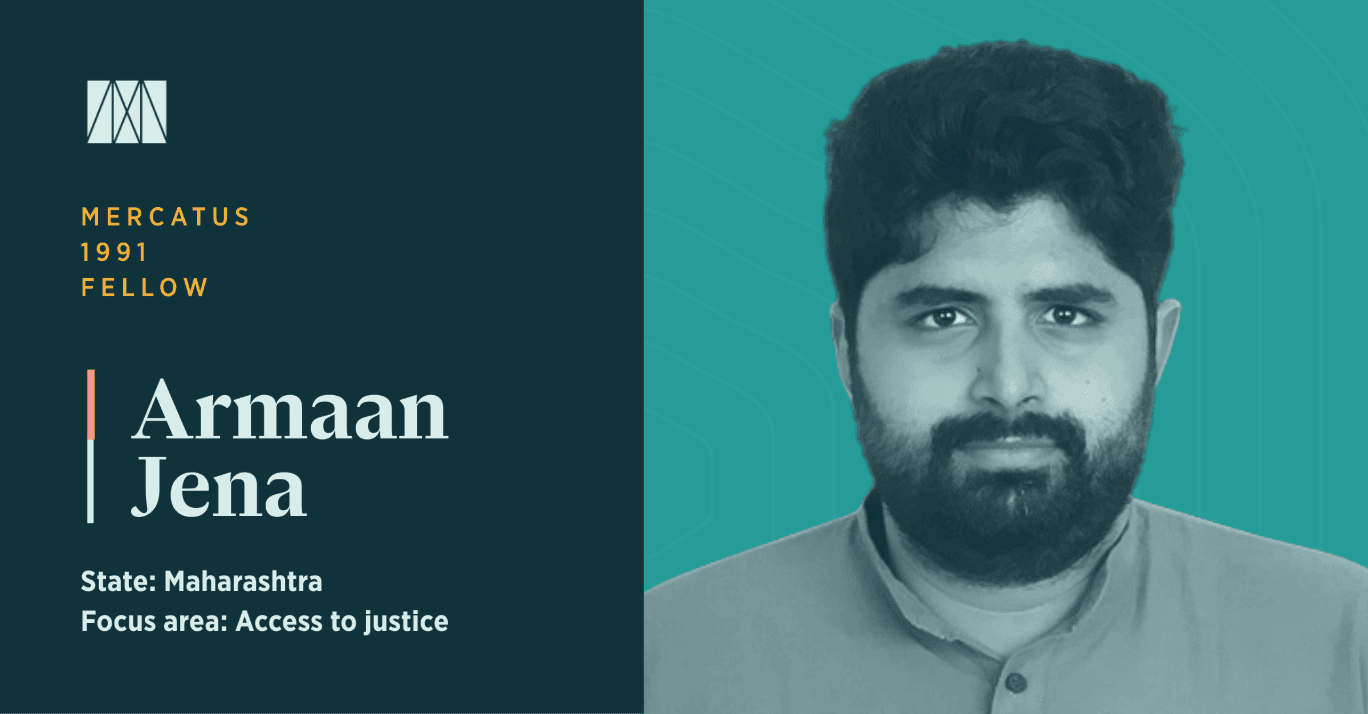
Armaan is a lawyer working on a specific and underappreciated failure in Maharashtra's justice delivery system: digital platforms that handle Right to Information requests, consumer grievances, and legal aid applications without generating legally usable decisions. When a payment gateway fails on the Bombay High Court's e-filing system, no record is created, no authority becomes accountable, and statutory time limits continue to run. The case simply disappears into a workflow state.
His project focuses on redesigning these processes so that every decision produces a written record, a named authority, and an avenue for appeal—a reform that sounds technical but determines whether ordinary citizens can hold the state accountable.
Bhanita Boro
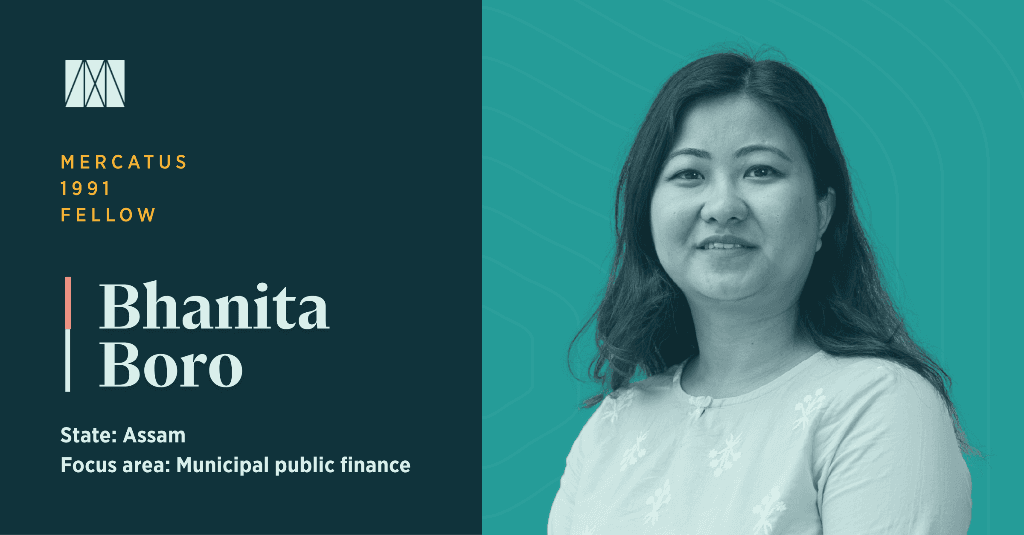
Bhanita is focused on public financial management in urban local governments—specifically on improving budget credibility, expenditure efficiency, and implementation outcomes. She is already embedded in active reform: She works directly with Assam's Directorate of Municipal Administration on revisions to the Assam Municipal Accounting Manual and the Assam Municipal Budget Manual. Her proposal focuses on the institutional mechanics that drive budget failure in the first place: standardized accounting systems, performance-linked fiscal transfers, and medium-term capital planning frameworks that give cities a credible basis for borrowing and investing. Without these foundations, even well-designed reforms remain on paper.
Duttatreya Das
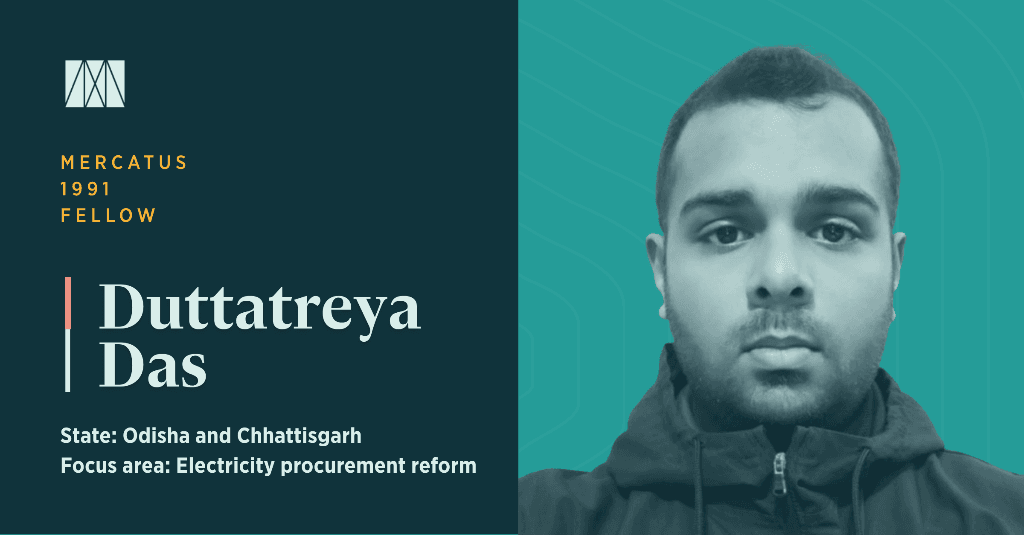
Duttatreya is working on electricity markets, with a focus on how distribution companies, or DISCOMs, procure and price electricity. India's power sector has made real progress on generation and renewables; distribution remains the weak link. His core argument is that DISCOMs continue to procure power the way they did in an era of scarcity — through long-term contracts of twenty to thirty years — even as renewable costs fall and short-term markets deepen. The gains from technological change remain trapped inside outdated procurement practices. Understanding why DISCOMs behave as they do is his starting point for reform.
Fahad Hasin
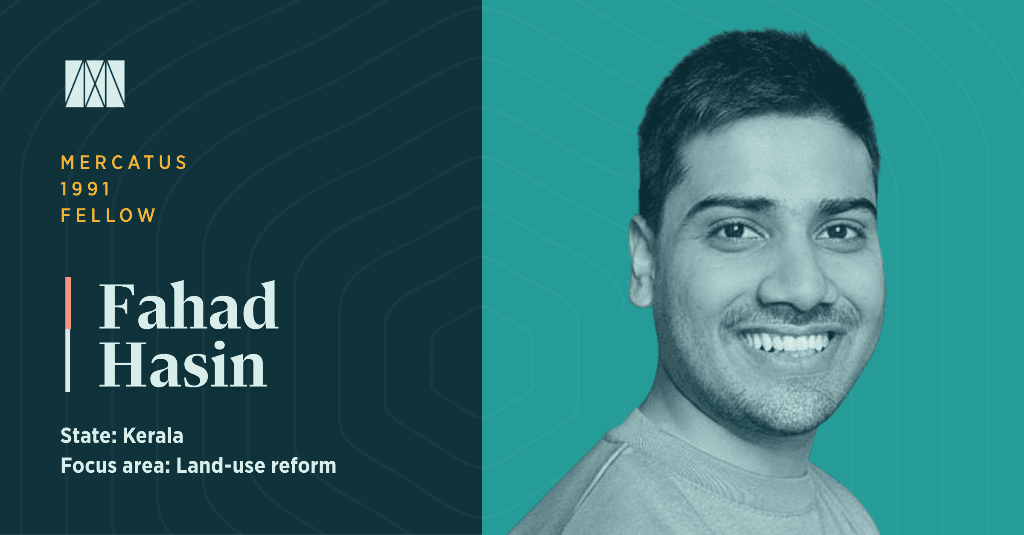
Fahad is working on land and commercial space availability in Kerala through regulatory reform around Floor Space Index rules, land-use laws, and policies that support market-led industrial development. India is not short of land, but much of it is locked in unproductive designations — agricultural, paddy land, or wetland — and converting it to other uses often requires navigating a discretionary bureaucratic process. For firms and industries, access to land in desirable locations on a predictable timeline is a genuine constraint on investment and employment. He is already in the field: He relocated to Kerala earlier this year and is pursuing this work on the ground, supported by an Emergent Ventures grant.
Harishtha B.

Harishtha is working on regulatory approvals for firms in Tamil Nadu, specifically on identifying which approvals are actually necessary, what information the state already holds, and where processes can be simplified. Her proposed approach centers on a unified business identifier and a federated data architecture: Instead of firms repeatedly submitting the same documents to multiple departments, verified information would be stored once, and retrieved as needed. This would eliminate sequential bottlenecks in which approval from one agency must be obtained before an application can proceed to the next. The cumulative burden of redundant approvals falls hardest on smaller firms, which often lack the resources to navigate them.
Isha Gour

Isha is working on tribal workforce development using technology and AI, with a focus on improving employment pathways for communities that have been systematically underserved by mainstream skilling systems. A recent governmental audit found that none of the 2,500 trainees in one tribal training cohort secured employment — not because of a lack of talent, but because training was disconnected from actual employer demand. Her initiative, TechForTribal, anchors training to verified hiring needs within local institutions and gives youth participants practical assignments — such as digitizing land records, organizing livelihood databases, and mapping forest rights claims — that develop real skills while strengthening state capacity.
Kartik Saboo
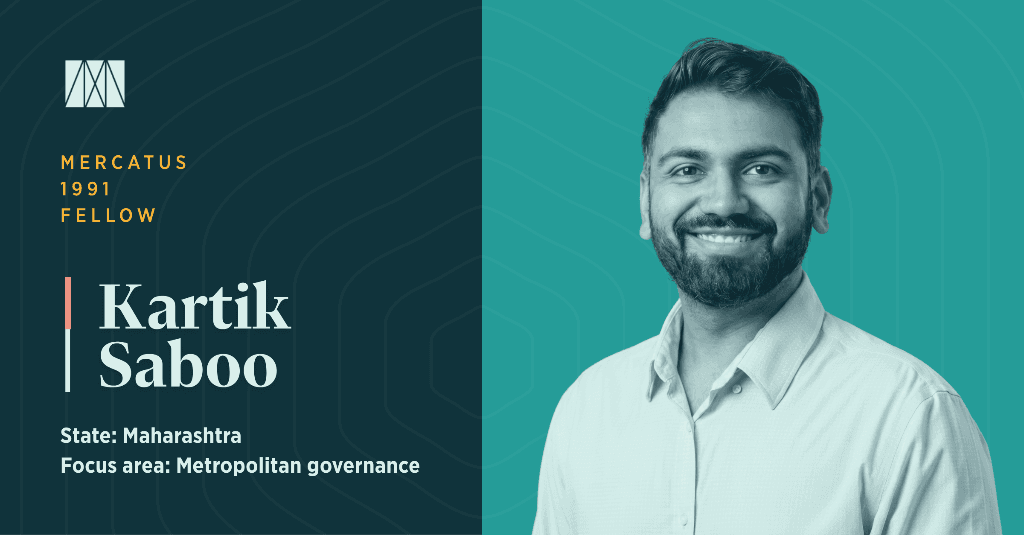
Kartik is working on metropolitan governance, with particular attention to the information, capacity, and implementation gaps that constrain India's rapidly growing urban regions. His focus is on how cities can use real-time data and market signals to plan and price public goods more effectively. Static master plans, designed years in advance, systematically lag behind the realities of urban growth; climate risk, flood-plain encroachment, and heat exposure vary significantly even within a single city. Cities that cannot plan and execute effectively struggle to deliver the infrastructure and services that dense, productive urban life requires.
Kumar Ramalingam
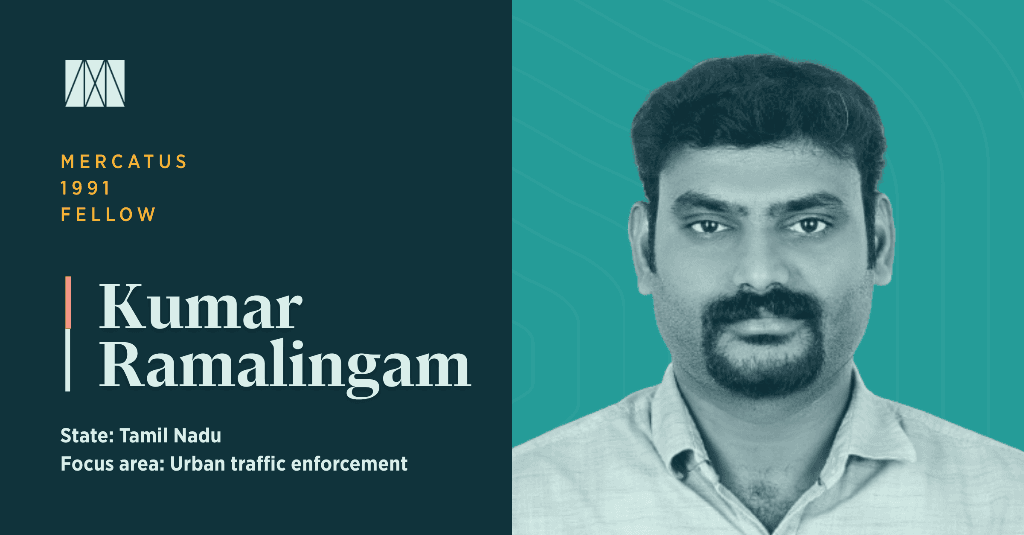
Kumar is working to improve urban traffic management through incentive design, technology-enabled enforcement, and systems that encourage greater compliance. He argues that congestion and weak enforcement are not primarily technical problems but incentive problems: The current system gives drivers little reason to comply and enforcers little reason to be consistent. The consequences are felt daily by millions of commuters and quietly erode urban productivity, with those costs compounding as cities grow.
Nawaz Ahmed
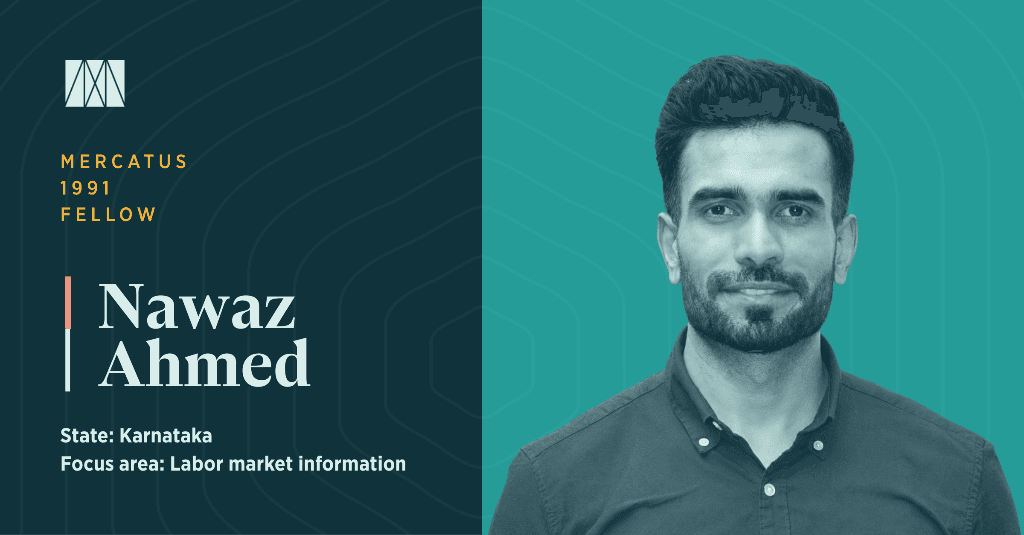
Nawaz is developing a Karnataka Skill Intelligence Platform to address information asymmetry in the state's skill development sector. Training supply in Karnataka is largely determined by historical course availability and enrollment trends rather than verified employer demand, a structural mismatch that produces certificates without jobs. His proposed reform shifts from centrally assigned training targets to a district-driven model, with publicly accessible labor market dashboards and outcome-linked financing that rewards placements and wage progression rather than enrollment counts. He is already working within Karnataka's skill development system and has the institutional access needed to pilot these reforms.
Rajat Singh Yadav
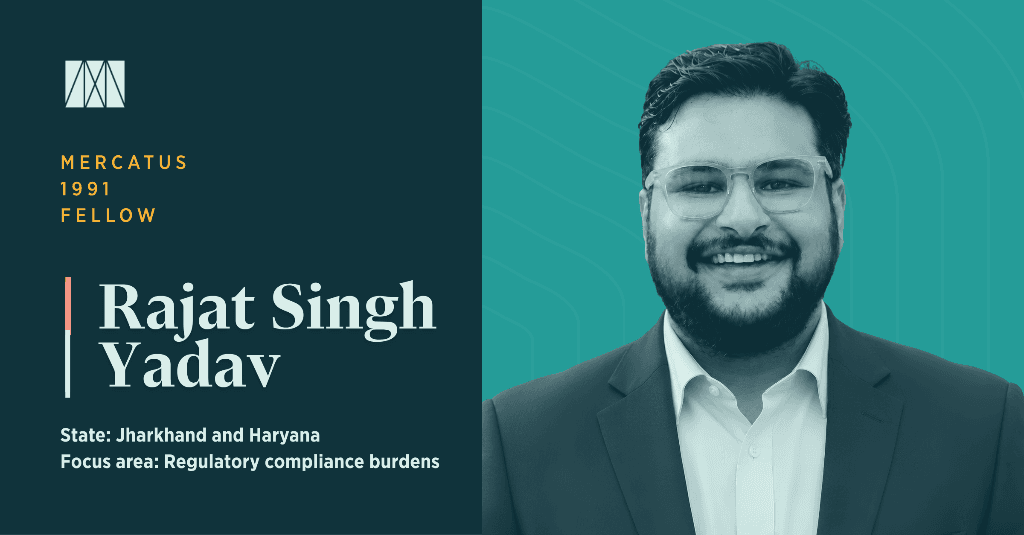
Rajat is working to reduce regulatory compliance burdens for micro and small enterprises. His proposed reform is a state-level Right to Operate framework: Enterprises below a defined threshold would be legally allowed to operate upon self-declaration rather than being required to obtain multiple prior approvals. Inspections would shift from routine visits to risk-based audits triggered by complaints, with violations documented digitally and penalties set in advance, thereby eliminating the discretion that currently makes compliance unpredictable and creates scope for harassment. The reform would explicitly include women-led and home-based enterprises, which are often excluded by zoning rules before they start.
Rishi A. Kumar
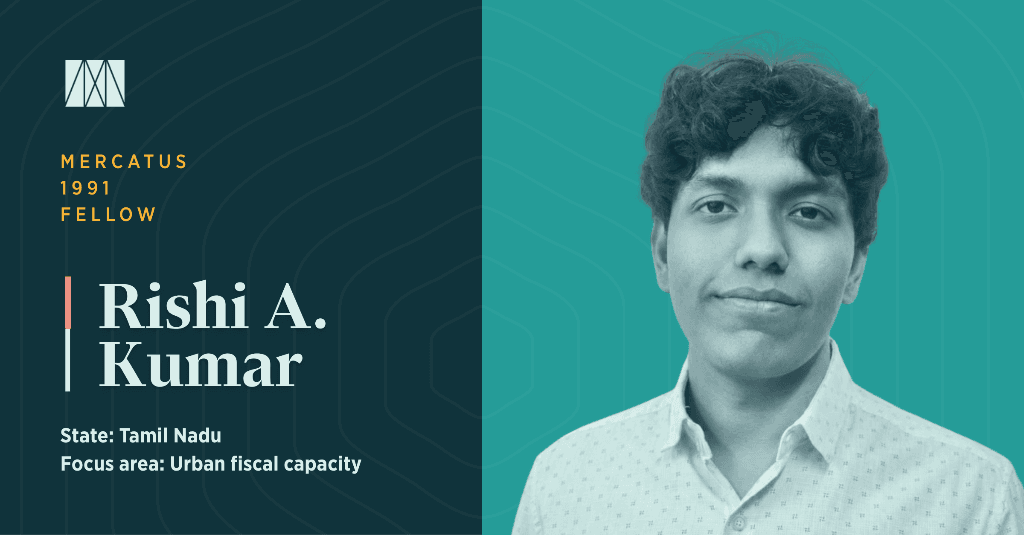
Rishi is working to strengthen the fiscal capacity and creditworthiness of urban local bodies through property tax reform, fiscal performance measurement, and access to municipal bond markets. Tamil Nadu is the most urbanized large state in India, yet its urban local bodies remain fiscally weak—dependent on state grants, relying on a property tax system based on outdated rental values, and largely locked out of capital markets. Even industrial hubs like Coimbatore obtain more than 40% of their revenues from state devolution. Cities growing this fast, with so little fiscal independence, cannot plan or invest on their own terms.
Shashank Pandey

Shashank is working on carbon tenure, green credits, and agroforestry-based carbon markets in Uttar Pradesh, where new climate policy is colliding with unresolved forest rights. The core problem is a property rights gap: India's carbon credit schemes do not specify whether sequestration rights belong to the state or to gram sabhas that hold Community Forest Rights over millions of hectares, and in practice states are proceeding as though those rights belong to the government. Smallholder farmers and tribal communities risk being dispossessed of an emerging economic asset before the market that asset belongs to even matures.